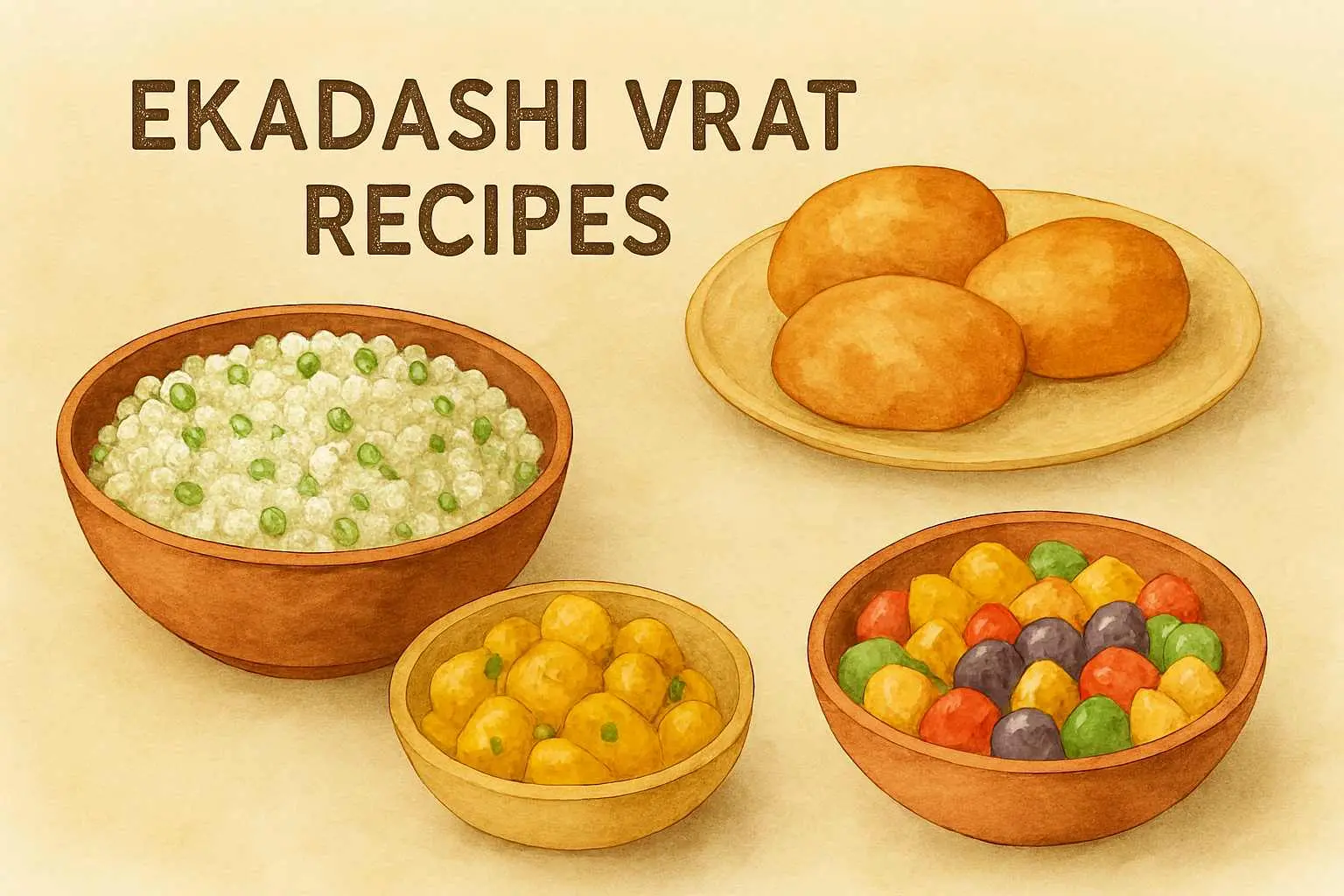
Ekadashi Vrat has a very auspicious, precious and a very special place in the Hindu tradition and is generally and usually observed twice every month. Ekadashi Vrat is devoted to the much-revered Bhagwan Vishnu or Lord Vishnu. The word Ekadashi in itself means the eleventh day and is a reference to the eleventh. Followers and believers observe Ekadashi Vrat or fast on this day and for this day special Ekadashi Vrat Recipes are prepared.
Ekadashi is believed to be a very spiritually auspicious and powerful time for self-discipline, prayer, inner cleanliness and inner purification. Keeping a fast on this day or observing this vrat is sternly believed to purify not only one’s body, but also their mind and soul. To maintain the piousness of the day, Ekadashi Vrat Recipes are prepared.
The spirit of Ekadashi Vrat is self-control and inner peace. By keeping themself away from grains, spicy, oily and heavy foods and following sattvik Ekadashi Vrat Recipes, devotees practice restraint over their mind, soul and inner senses which will not only help decrease negative thoughts but also promotes mental insight and clarity. The discipline and will to abstain from physical desires like taste strengthens willpower and encourages a more balanced and peaceful lifestyle.
Importance and Significance of Ekadashi Vrat and Ekadashi Vrat Recipes
If we look at the spiritual factor, Ekadashi is dedicated to Lord Vishnu who is considered to be the preserver of the universe amongst the Trinity. Devotees believe that fasting and praying with full dedication and devotion helps to delete Bure Karm and past sins rings and brings in divine feeling and blessings. Ekadashi Vrat is believed to cultivate devotion, gratitude and humility.
Ekadashi Vrat apart from spiritual well-being also has health benefits. This fasting and the sattvik Ekadashi Vrat recipes allow the digestive system to take a backseat and rest, helps detoxify the body and improve overall well-being spiritually and physically. Many even experience increased energy levels and a sense of calmness after observing the vrat.
Thus, Ekadashi Vrat is not just a ritual but a meaningful and spiritual practice that enhances and nurtures physical health, mental peace and spiritual well-being making it an important observance in Hindu culture.
Ekadashi Vrat should be observed with devotion and consciousness, where apart from devotion, food plays an important role in supporting both spiritual focus and physical balance. On this sacred auspicious day, devotees avoid grains mainly rice, lentils, onion, and garlic and instead prepare sattvik Ekadashi Vrat recipes and meals using fasting-friendly ingredients.
Ekadashi vrat recipes are supposed and designed in a manner to be light, pure and easy to digest which helps in keeping the body energized while the mind remains calm and at peace.
Features of Ekadashi Vrat Recipes
Common ingredients which are used in Ekadashi Vrat recipes mainly include sabudana or sago, aloo or potatoes, falahar or fruits, doodh or milk, dahi or curd, nuts, makhana or foxnuts and special flours like kuttu, singhara and rajgira. Amongst these recipes fro Kuttu Atta are the most popular.
Popular dishes such as sabudana khichdi, kuttu ki puri, vrat wale aloo, dahi aloo and fruit chaat are most preffered and are very filling. Milk-based preparations like makhana kheer or sabudana kheer are often offered as bhog and also enjoyed as meals during the day.
These Ekadashi Vrat recipes are usually prepared with sendha namak or pink salt and minimal spices to maintain purity. Cooking is done fresh and with devotion, as the food is first offered to Lord Vishnu before consumption. It is expected to not prepare these recipes with an angry mind.
Ekadashi vrat recipes are not just about fasting, but about mindful eating. They encourage self-discipline, promote digestion, and align the body with spiritual practices. By choosing sattvik and wholesome foods, devotees experience both inner peace and physical well-being while observing Ekadashi
What Ekadashi Vrat recipes and Foods are allowed on Ekadashi?
Before we dive into recipes, here are a few general things to be followed on any Ekadashi:
- Avoid grains, rice, lentils, onion, and garlic, meat, chicken, fish and eggs
- Use sendha namak (rock salt or pink salt) instead of regular salt
- Common fasting ingredients include sabudana or sago, potatoes, fruits, milk, curd, nuts, makhana, kuttu (buckwheat) and singhara (water chestnut flour)
Pausha Putrada Ekadashi and Ekadashi Vrat Recipes to follow on the day
Pausha Putrada Ekadashi is a sacred day observed with devotion, fasting and prayers dedicated to Bhagwan Vishnu. Pausha Putrada Ekadashi which is observed in this month of December or January is especially done for family and children praying for the well-being and blessings of children. Along with spiritual practices, food plays an important role during this vrat (fast), as meals are kept light, pure and sattvik.
If one is observing Pausha Putrada Ekadashi or any other Ekadashi, here are some traditional, easy-to-make recipes that are both nourishing and suitable for fasting.
1. Sabudana Khichdi : A classic Ekadashi vrat , sabudana khichdi is light yet filling.
Ingredients:
Ingredients:
- 1 cup sabudana (sago or tapioca)
- 2 medium potatoes, boiled and diced
- ½ cup roasted peanuts, coarsely crushed
- 1–2 green chilies, finely chopped
- 1 tsp cumin seeds or powder
- 2 tbsp ghee
- Sendha namak (pink salt or rock salt) to taste
- 1 tsp lemon juice (optional)
- Fresh coriander leaves for garnish
Preparation:
Soak the sabudana:
Rinse sabudana 2–3 times. Soak in just enough water to cover it for 4–5 hours or overnight. The pearls should be soft and non-sticky but not too soft.
Prepare peanut mix:
Mix soaked sabudana with crushed peanuts and sendha namak. Keep aside.
Cook the khichdi:
Heat ghee in a pan. Add cumin seeds and let them crackle.
Add green chilies and boiled potatoes. Saute them lightly.
Add sabudana:
Add the sabudana mixture and gently mix. Cook on low heat for 5–7 minutes, stirring occasionally, until sabudana turns translucent.
Switch off heat, add lemon juice if using, and garnish with coriander.
Why it’s perfect:
It provides energy during fasting and is easy to digest when cooked properly.
2. Kuttu Ke Puri
Ingredients:
- 1 cup kuttu atta (buckwheat flour)
- 2 medium potatoes, boiled and mashed
- Sendha namak (rock salt) to taste
- ½ tsp cumin seeds (optional)
- 1 green chili, finely chopped (optional)
- Water (if needed, use very little)
- Ghee or oil for deep frying
Method:
Drain:
Remove and place on kitchen paper to absorb excess oil.
Prepare the dough:
In a bowl, mix kuttu atta, mashed potatoes, sendha namak, cumin seeds, and green chili. Knead gently into a soft dough. Avoid adding too much water, as potatoes provide enough moisture. Grease your palms lightly. Divide the dough into small portions and flatten them gently into small puris. Kuttu dough is delicate, so handle carefully.
Heat oil:
Heat ghee or oil in a deep pan on medium heat.
Fry the puris:
Gently slide the puris into hot oil. Fry on medium-low heat until they puff slightly and turn golden brown on both sides.
Serving tip:
Pair with vrat-style aloo sabzi or plain curd.
3. Vrat wale Aloo Jeera
Ingredients:
- 3–4 medium potatoes, boiled, peeled, and cubed
- 1½ tsp cumin seeds (jeera)
- 2 tbsp ghee (or oil)
- 1–2 green chilies, slit or finely chopped
- Sendha namak (rock salt) to taste
- Fresh coriander leaves for garnish
- Lemon juice (optional)
Method
Finish:
Switch off the heat. Add a few drops of lemon juice if desired and garnish with fresh coriander.
Heat ghee:
Heat ghee in a pan on medium flame. Add cumin seeds and let them crackle.
Add chilies:
Add green chilies and saute for a few seconds.
Add potatoes:
Add the boiled potato cubes and gently mix so they don’t break.
Season:
Sprinkle sendha namak and toss lightly.
Cook:
Cook on low to medium heat for 5–7 minutes, turning occasionally, until the potatoes are lightly crisp from outside.
Why it works:
Potatoes are allowed during Ekadashi and help keep you full for longer hours.
4. Fresh Fruit Chaat
A refreshing option if you prefer a light fast.
Ingredients:
Apple, banana, papaya, pomegranate, a few drops of lemon juice, chopped nuts
Optional add-on:
A drizzle of honey for natural sweetness.
Conclusion
Ekadashi is not just about fasting and Ekadashi Vrat Recipes are not just food menu items, but is about purity of mind, body, intention and cleansing of soul and spirit. These simple Eladashi Vrat recipes help maintain energy while keeping the spiritual essence of the day intact. Whether you observe a complete fast or a phalahar vrat, mindful eating of Ekadashi Vrat Recipes add to the sauspiciousness of the sacred day.
May Lord Vishnu bless your home with peace, prosperity, and happiness on this auspicious Ekadashi.