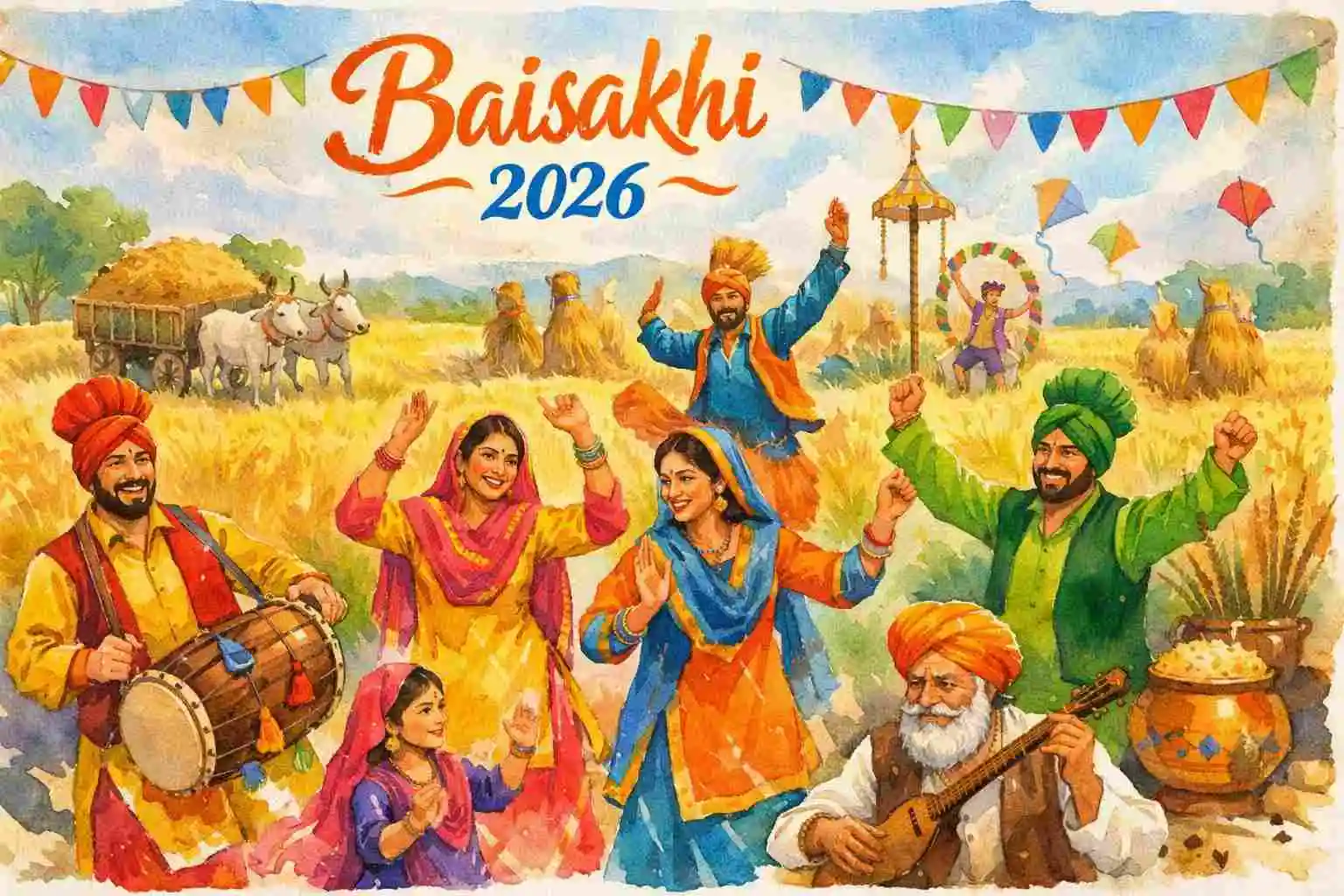
Baisakhi 2026 the very vibrant harvest festival of Punjab will be celebrated on Tuesday, April 14th. In addition to being the harvest festival, it also marks the day of formation of the Khalsa Panth by Guru Gobind Singh in 1699. The day of Baisakhi 2026 will be accompanied by Gurudwara Visit, Nagar Kirtans, Bhangra and Gidda and feasting on yummy festive foods.
Baisakhi 2026: Date and Timings
| Baisakhi 2026: Date | Tuesday, April 14th 2026 |
| Sankranti Moment | 09:32 AM on Tuesday, 14th April, 2026 |
| Muhurat for Baisakhi 2026 rituals | Just after sunrise |
Baisakhi 2026: History and Significance
Baisakhi is deeply rooted not only in agriculture hues but also to religious sentiments. Baisakhi is about the celebration of harvest of rabi crops, especially wheat which represents fortune and affluence.
Apart from this, the most significant aspect behind observance of Baisakhi is the formation of the Khalsa Panth by Guru Gobind Singh in 1699 at Anandpur Sahib. It was on this day that Guru Gobind Singh initiated the Khalsa which is a consortium of committed Sikhs who walk the path of spiritual discipline and morality.
This formation revolutionized Sikhism into a very distinct and respected religion which had its own identity, values, took courage and faith to another level and stressed upon valour, faith, justice and faith.
Baisakhi 2026 thus has multi-fold significance:
- Harvest Festival: It celebrates the successful harvest season post which farmers thank the nature and also represents fortune and prosperity.
- Religious Importance: The formation of the Khalsa marks a turning point in Sikh history, promoting values like bravery, unity and justice.
- Solar New Year: In many parts of India, Baisakhi marks the beginning of a new solar year. Similar observances which have different names and celebrate the harvest season are celebrated like Poila Boishakh, Bihu, Puthandu and Vishu.
Rituals and Celebrations
Baisakhi is observed with great fervour, enthusiasm, energy, colours in the air and faith and gratitude to nature across Punjab and other parts of North India. The day starts with bath in holy rivers and then Gurudwara visit.
Main customs:
- Gurudwara Visits: Devotees gather for prayers, kirtans and sit and listen to readings from the Guru Granth Sahib. The sight at Anandpur Sahib is worth watching.
- Nagar Kirtan: Processions led by the Sikh community, featuring singing, martial arts displays sees huge participation.
- Langar: Free community meals served to all where there is no discrimination based on age, gender, caste and religion. Everyone sits and eats together.
- Sewa: Offering egoless services or Seva at Gurudwara which includes, cleaning, cooking, parsad distribution, etc.
- Holy Dip: Many take dips in sacred rivers like the Ganges for spiritual purification.
Traditional Dress
Baisakhi is incomplete without vibrant and colourful traditional attire showing the vibrant pride of Punjab:
- Men:
Bright kurta-pajamas paired with colorful pag or turbans (pagri), often worn during energetic dances like Bhangra. - Women:
Salwar kameez with phulkari dupattas, adorned with traditional jewelry and juttis. Women perform the graceful Gidda dance.
Traditional Dishes
Popular dishes which showcase the richness of the Punjabi culture include:
- Sarson da Saag & Makki di Roti
- Chole Bhature
- Kada Prasad (a sacred offering in Gurudwaras)
- Lassi (refreshing yogurt-based drink)
- Meethe Chawal (sweet rice) or Peele Chawal
- Kadhi Pakora and Rice
- Pinni
Cultural Festivities
Baisakhi is marked by Mela or fairs, folk music and high energy dance performances.
- Bhangra: A high-energy dance performed by men celebrating harvest joy.
- Gidda: A traditional dance by women, expressing happiness through rhythm and storytelling.
- Fairs and Melas: Organized in villages and cities with rides, food stalls and cultural programs.
Is Baisakhi 2026 a Public Holiday?
Yes, Baisakhi is a public holiday in several states of India, especially in Punjab, Chandigarh and Haryana. Government offices, schools, and many businesses remain closed.
In other states, it is an optional holiday.
Conclusion
Baisakhi 2026 other than being a harvest festival, is a celebration of faith, history, nature and cultural identity. From the formation of the Khalsa by Guru Gobind Singh to the joyous dances of Bhangra and Gidda, the festival beautifully blends spirituality with celebration. Whether you visit a Gurudwara, enjoy traditional dishes, or simply soak in the festive vibes, Baisakhi is a reminder of gratitude, unity and new beginnings.