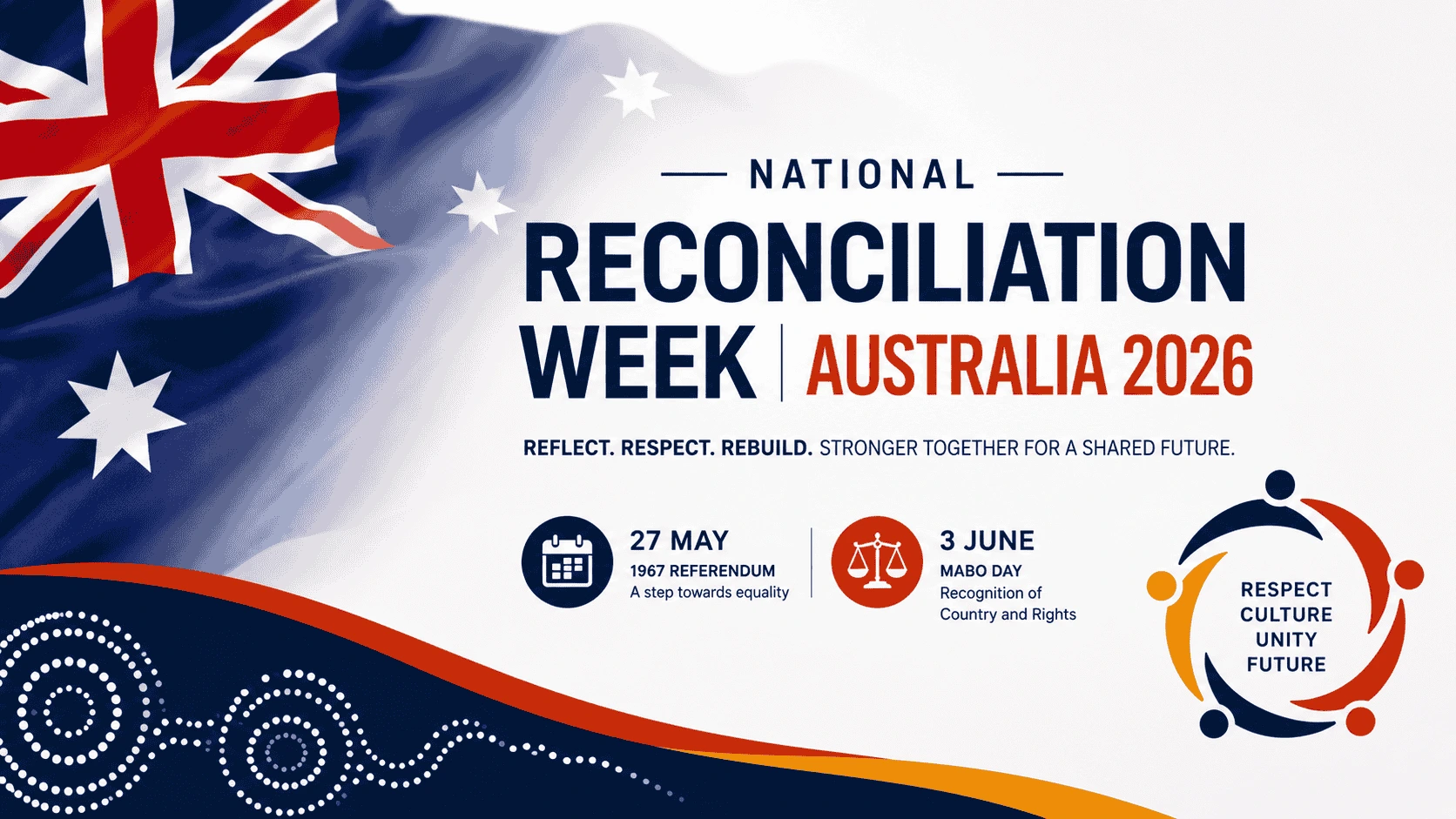
Every year, people across Australia come together to observe National Reconciliation Week (NRW), a special time to learn about shared history, respect Aboriginal and Torres Strait Islander peoples and build stronger relationships between communities.
National Reconciliation Week 2026 will be observed from May 27 to June 3, 2026. The week is not just about ceremonies or events. It is about understanding the past, acknowledging mistakes and moving toward a more united future.
What is National Reconciliation Week?
National Reconciliation Week is an annual observance in Australia that focuses on healing, equality, respect and unity between Indigenous and non Indigenous Australians.
The week encourages schools, workplaces, organizations and communities to have honest conversations about Australia’s history and culture. Many people attend cultural events, storytelling sessions, community walks, art exhibitions and educational programs during this time.
The word reconciliation means rebuilding relationships and creating trust after harm or injustice. In Australia, it mainly refers to improving relationships between Aboriginal and Torres Strait Islander peoples and the wider Australian community.
Why Are the Dates Important?
The dates of National Reconciliation Week are deeply meaningful because they mark two important events in Australian history.
May 27-The 1967 Referendum
On May 27, 1967 Australians voted in a historic referendum that allowed Aboriginal people to be counted in the national census and gave the federal government power to make laws for them. It was a major step toward equality and recognition.
June 3- Mabo Day
June 3 marks the anniversary of the historic Mabo decision by the High Court of Australia in 1992. The ruling recognized that Aboriginal and Torres Strait Islander peoples have traditional rights to the land. It rejected the old idea that Australia belonged to nobody before British settlement.
These two important milestones make National Reconciliation Week a powerful and emotional period for many Australians.
National Reconciliation Week 2026 Theme
Each year, a special theme is announced to inspire discussions and community participation. The official 2026 theme may focus on unity, truth telling, cultural respect or future generations.
Themes usually encourage Australians to reflect on how everyone can contribute to fairness, inclusion and understanding in everyday life.
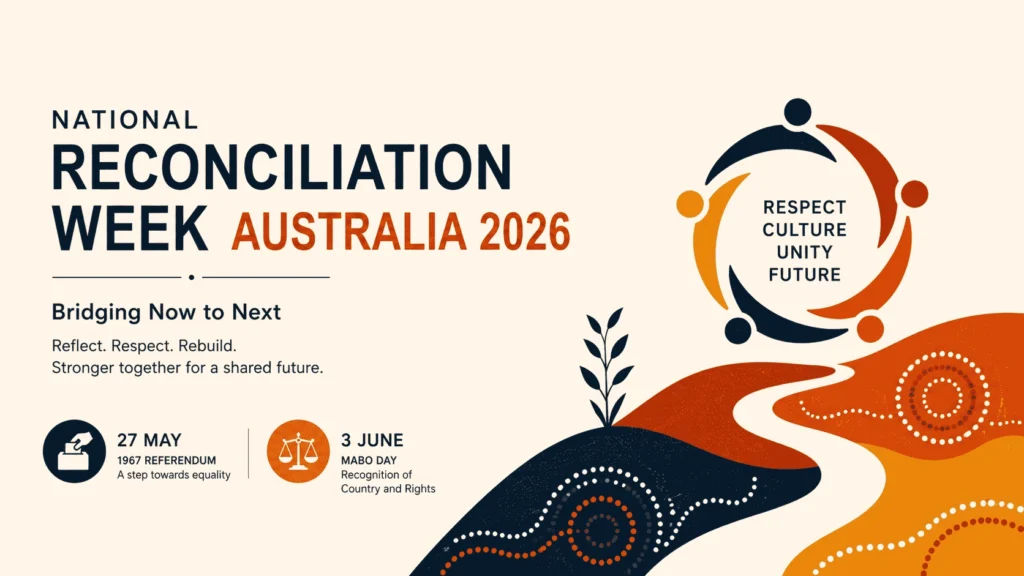
Why National Reconciliation Week Matters
National Reconciliation Week is important because it creates awareness about the experiences, struggles and achievements of Indigenous Australians.
For many years, Aboriginal and Torres Strait Islander communities faced discrimination, loss of land, cultural suppression and unfair treatment. Reconciliation is about recognizing these truths while working toward equal opportunities and mutual respect.
The week also celebrates the rich cultures, languages, music, art and traditions of Indigenous communities that have existed for tens of thousands of years.
How National Reconciliation Week is Observed
People across Australia observe the week in many meaningful ways.
Community Events
Local councils and organizations host :
- Cultural performances
- Traditional dance programs
- Art exhibitions
- Public talks
- Smoking ceremonies
- Community walks
Schools and Colleges
Educational institutions often organize :
- History discussions
- Indigenous storytelling sessions
- Art and essay competitions
- Awareness workshops
- Classroom activities about reconciliation
Workplaces
Many offices and companies conduct cultural awareness sessions and encourage employees to learn about Indigenous history and traditions.
Social Media Campaigns
People also share messages of support online using reconciliation related hashtags and educational posts.
The Role of Indigenous Culture
Aboriginal and Torres Strait Islander cultures are among the oldest continuing cultures in the world. National Reconciliation Week highlights the importance of protecting and respecting these traditions.
Music, paintings, storytelling, spiritual beliefs and connection to land are central parts of Indigenous identity. During the week, many Australians take time to appreciate these traditions and learn directly from Indigenous voices.
Small Actions That Make a Difference
Reconciliation is not only the responsibility of governments or organizations. Even small personal actions can help create positive change.
People can :
- Learn about Indigenous history
- Support Indigenous businesses and artists
- Listen respectfully to Indigenous voices
- Challenge stereotypes and racism
- Attend local reconciliation events
- Teach younger generations about respect and inclusion
These simple steps help build understanding and stronger communities.
Final Thoughts
National Reconciliation Week 2026 is more than a yearly event. It is a reminder that respect, truth and understanding are essential for a better future.
The week encourages Australians to reflect on the past while creating hope for future generations. Through education, conversations and cultural appreciation, reconciliation becomes a shared journey that benefits everyone.
As Australia continues moving forward, National Reconciliation Week remains an important opportunity to celebrate Indigenous culture, recognize historical truths and strengthen unity across the nation.