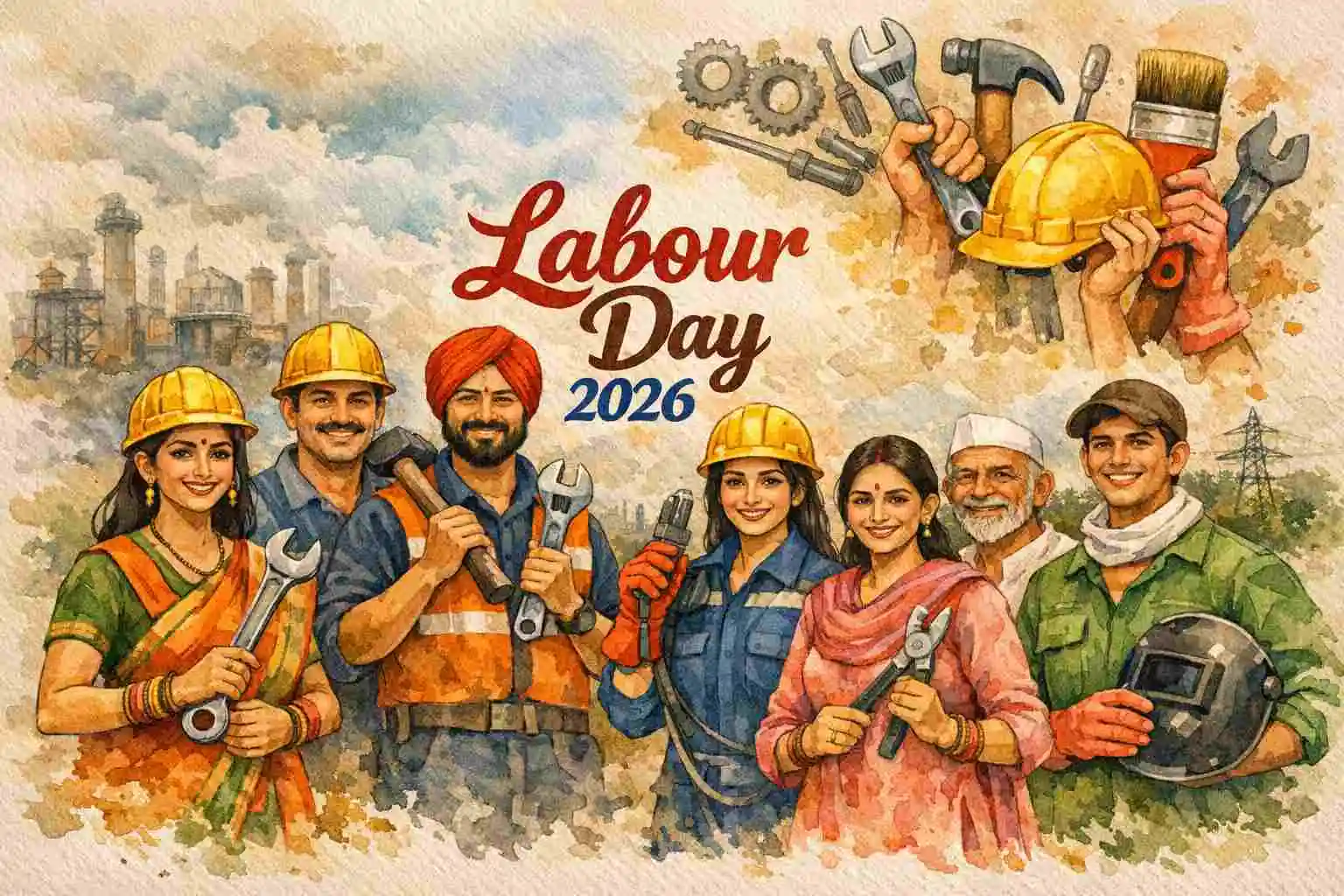
Observed every year on May 1, Labour Day or May Day is a sort of commemoration for a very serious social matter. Labour Day 2026 is not just a symbolic pause from work but also a moment to reflect on workers’ rights, dignity, respect, importance and contributions to building the society and to nation-building.
Is Labour Day 2026 a Holiday in India?
Yes, Labour Day is a public holiday in many Indian states. States like Tamil Nadu, Kerala, West Bengal, Maharashtra, Bihar, Uttar Pradesh and Karnataka typically observe it as a holiday, with government offices, banks, educational institutions and many businesses closed.
However, in some states, it may not be a compulsory holiday. In some it may also be a optional holiday. Even where it’s not officially declared, trade unions and worker groups still mark the day through rallies, awareness campaigns, processions and community events.
This Shramik Diwas being on a friday will give the workforce a little more time to relax and rejuvenate.
Where Was Labour Day First Observed in India?
The roots of Labour Day 2026 in India go back to 1923 in Chennai (then Madras). It was first celebrated by the Labour Kisan Party of Hindustan which was led by Comrade Singaravelu Chettiar. He organized the first May Day celebration at Marina Beach, making it a historic milestone in India’s labour movement.
It was also the first time the red flag which represents the struggles of the workers was used in India. It was there that global fight for fair wages, reasonable working hours, and humane conditions became a national issue in India as well.
Globally, Labour Day traces its origins to the Haymarket Affair in Chicago (1886), where workers protested for an eight-hour workday. Inspired by such movements, Indian labour leaders began advocating for workers’ rights during British colonial rule.
Significance of Labour Day 2026 in India
1. Workers’ Rights and Dignity
It stresses the need of fair wages, safe working conditions, gender equality and social security for all workers.
2. Recognition of Contributions
India’s economy runs on the backbone of its workforce like construction workers, farmers, domestic helpers, industrial employees. This dayrecognizes their role in nation-building.
3. Knowledge and Marketing
Trade unions and organizations use this day as a platform to push for policy reforms, new labour codes and also to raise awareness about exploitation and demand quick and better implementation of labour laws.
4. Inclusive Equality
Economic growth must be inclusive, ensuring that no one is left behind.
Why New Reforms Matter on Labour Day 2026
New labour codes are being introduced in India which look at balancing in ease of doing business in unison with worker protection and rights. While businesses benefit from simplified compliance, workers gain broader coverage and recognitionespecially those in informal and gig sectors.
This Labour Day 2026, everyone should come together to debate and advocate for the labour, for the workers and for the workforce who are the backbone of the country.
How Labour Day 2026 is Celebrated in India
- Rallies and marches organized by trade unions and workers union
- Seminars and discussions on workers’ rights and new reforms
- Awards and recognition for exemplary workers as a thank you and gratitude
- Cultural programs celebrating labour contributions and their importance
- Political parties and worker organizations also announce welfare schemes or policy demands on this day.
Final Thoughts
Labour Day 2026 is not just a day off but about thanking the workforce and their struggles that secured today’s rights and recognizing the work still left to be done. As India evolves economically, the conversation around labour must also evolve becoming more inclusive, equitable and forward-looking.