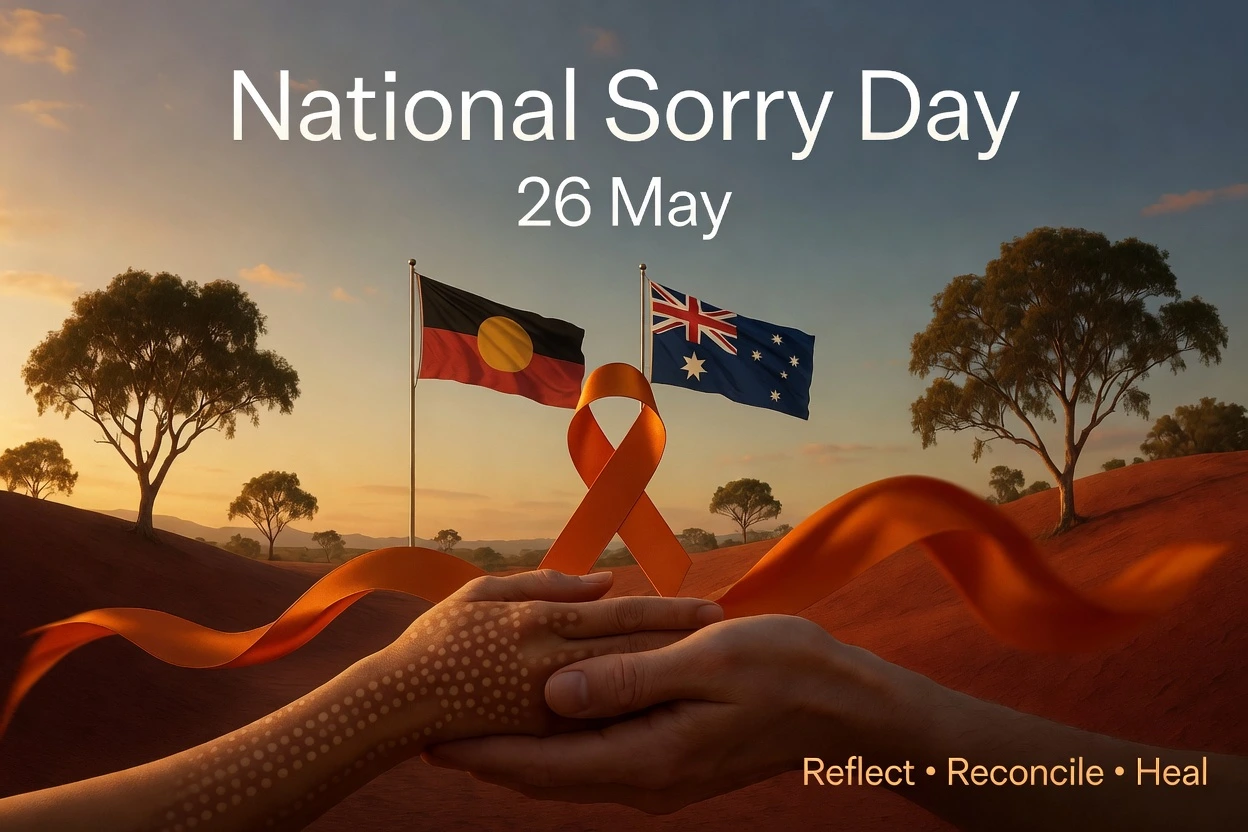
Every year, Australia observes National Sorry Day on May 26. It is a deeply emotional and important day that remembers the pain and suffering experienced by the Aboriginal and Torres Strait Islander peoples, especially the children who were taken away from their families.
In 2026, National Sorry Day falls on Tuesday, May 26. The day is not a celebration. Instead, it is a time for reflection, healing, understanding, and respect.
What is National Sorry Day?
National Sorry Day is observed to acknowledge the mistreatment of Indigenous Australians who became known as the Stolen Generations. For many years, government policies allowed Aboriginal and Torres Strait Islander children to be removed from their homes and families.
These children were often placed in institutions, foster homes, or adopted by non-Indigenous families. Many lost their language, culture, identity and connection to their community.
National Sorry Day gives Australians a chance to recognize this painful history and support healing and reconciliation.
The History Behind National Sorry Day
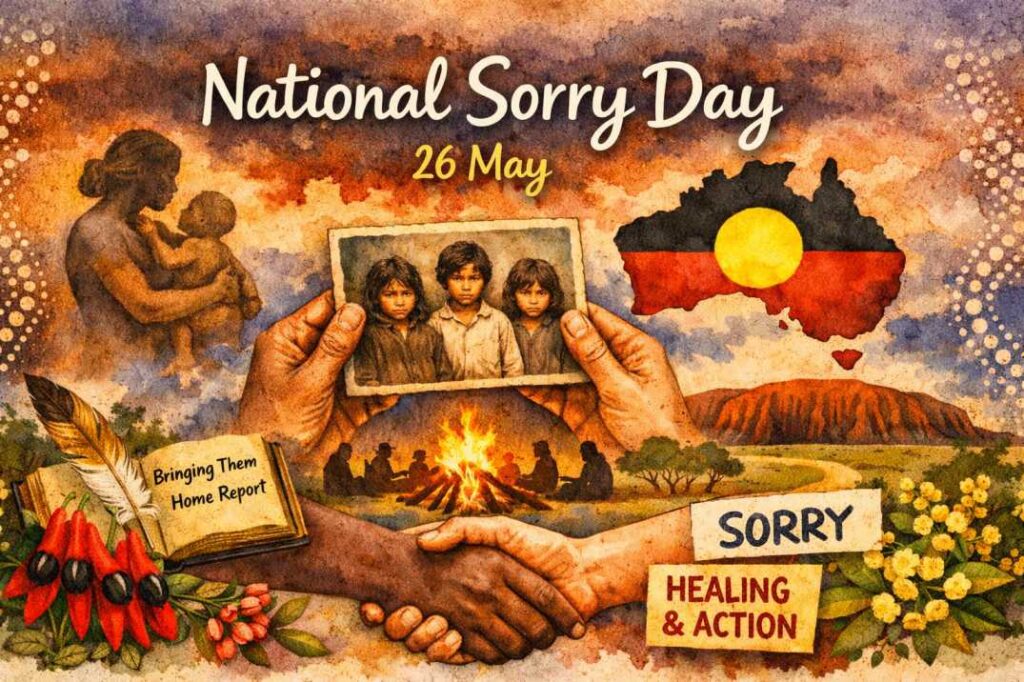
The idea of National Sorry Day began after the release of a major report called “Bringing Them Home” in 1997. The report shared heartbreaking stories from Indigenous people who had been separated from their families as children.
After the report was released, Australians realized the deep emotional wounds caused by these policies. As a result, the first National Sorry Day was observed on May 26, 1998.
A major moment came in 2008, when then Prime Minister Kevin Rudd formally apologized to the Stolen Generations in the Australian Parliament. His speech became one of the most emotional moments in modern Australian history.
Why is National Sorry Day Important?
National Sorry Day is important because it reminds people that healing starts with acknowledging the truth. Many Indigenous families still feel the effects of separation and cultural loss even today.
The day encourages Australians to:
- Learn about Indigenous history
- Listen to stories from survivors
- Support reconciliation efforts
- Respect Aboriginal and Torres Strait Islander cultures
- Stand against racism and discrimination
It is also a reminder that saying “sorry” is not just about words. It is about understanding the pain caused and working together for a better future.
What are the Stolen Generations?
The term “Stolen Generations” refers to Aboriginal and Torres Strait Islander children who were forcibly removed from their families between the late 1800s and the 1970s.
The government believed Indigenous children should be raised in white society. Because of this, thousands of children grew up without knowing their parents, traditions or native languages.
Many survivors have shared stories of loneliness, abuse, and emotional trauma. Even generations later, the impact can still be felt in families and communities.
How is National Sorry Day Observed?
Across Australia, many people participate in events and ceremonies on National Sorry Day. These activities focus on remembrance, education, and healing.
Common observances include:
- Community gatherings
- Candlelight vigils
- Educational programs in schools
- Storytelling sessions by Indigenous elders
- Art exhibitions and cultural performances
- Moments of silence and prayer
Many Australians also wear a “Sorry Day” badge or ribbon to show support and solidarity.
Difference Between National Sorry Day and Reconciliation Week
Some people confuse National Sorry Day with National Reconciliation Week, but they are connected while still being different.
National Sorry Day happens on May 26 and focuses specifically on the Stolen Generations and acknowledging past wrongs.
National Reconciliation Week begins the next day, May 27 and continues until June 3. It encourages all Australians to build respectful relationships between Indigenous and non-Indigenous communities.
Simple ways you can show support (from anywhere)
Listen and learn: Read reliable summaries about the Stolen Generations and the bringing them home report.
Attend or watch events: Many organisations stream Sorry Day events online; join to hear survivors and community leaders.
Donate or volunteer: Support local Indigenous organisations that help survivors and families.
Speak up for action: Encourage governments and institutions to follow through on recommendations that help survivors now.
The Message of National Sorry Day
The message behind National Sorry Day is simple but powerful : understanding history is necessary for healing.
It teaches compassion, empathy and respect. It also encourages younger generations to learn the truth about Australia’s past so that mistakes are not repeated.
For many Indigenous Australians, being heard and acknowledged is an important step toward emotional healing.
Final Thoughts
National Sorry Day is one of Australia’s most meaningful observances. It is a day to remember the children and families affected by the policies of forced removal and to honor the strength of survivors.
While the past cannot be changed, understanding and compassion can help create a more respectful and united future. National Sorry Day reminds everyone that healing begins with truth, respect, and genuine reconciliation.